
Does the idea of dealing with state government forms make you nervous? You are definitely not alone. Many people in Connecticut feel overwhelmed when they start looking into medical cannabis. The rules can seem confusing, and nobody wants to make a mistake with legal paperwork. But here is the good news: the process is actually quite simple when you have the right help. Getting your card opens the door to legal protection and tax savings. It also allows you to buy higher limits of medication than recreational users. In this guide, we will walk you through exactly how to get & renew a Medical Marijuana Card in Connecticut.
We will break it down into easy steps so you can focus on feeling better. If you want professional guidance right away, you can use our trusted medical marijuana evaluation service to get started.
Am I Eligible? Qualifying Conditions for Medical Marijuana in CT
Before you fill out any forms, you need to know if you qualify. The state of Connecticut has a specific list of health issues that they accept. They call these “Debilitating Medical Conditions.”
You cannot just ask for a card because you are stressed. You must have a diagnosis from a medical professional. However, the list of approved conditions is quite long and covers many common struggles.
Here are some of the most common qualifying conditions in Connecticut:
- Cancer
- Glaucoma
- Positive Status for HIV or AIDS
- Parkinson’s Disease
- Multiple Sclerosis (MS)
- Damage to the Nervous Tissue of the Spinal Cord
- Epilepsy
- Cachexia (Wasting Syndrome)
- Crohn’s Disease
- Post-Traumatic Stress Disorder (PTSD)
- Sickle Cell Disease
- Post Laminectomy Syndrome with Chronic Radiculopathy
- Severe Psoriasis and Psoriatic Arthritis
- Amyotrophic Lateral Sclerosis (ALS)
- Ulcerative Colitis
- Complex Regional Pain Syndrome (CRPS)
- Irritable Bowel Syndrome (IBS) associated with chronic abdominal pain
- Chronic Pain of at least 6 months duration associated with a specified underlying chronic condition
This is not the full list, but it covers the main ones. If you suffer from chronic pain or PTSD, you are likely eligible.
Physician’s Note:
Just having one of these conditions isn’t enough on its own. You need a certified physician, Physician Assistant (PA), or Advanced Practice Registered Nurse (APRN) to officially certify you. They must be licensed in Connecticut and registered with the Medical Marijuana Program. They are the gatekeepers who verify your condition.
Step-by-Step: How to Get a New Medical Marijuana Card
If you have your medical records ready, the process is very straightforward. We have broken it down into three easy steps.
Step 1: The Medical Evaluation
The first step is seeing a doctor. In the past, you had to drive to a clinic and sit in a waiting room. Thankfully, things have changed.
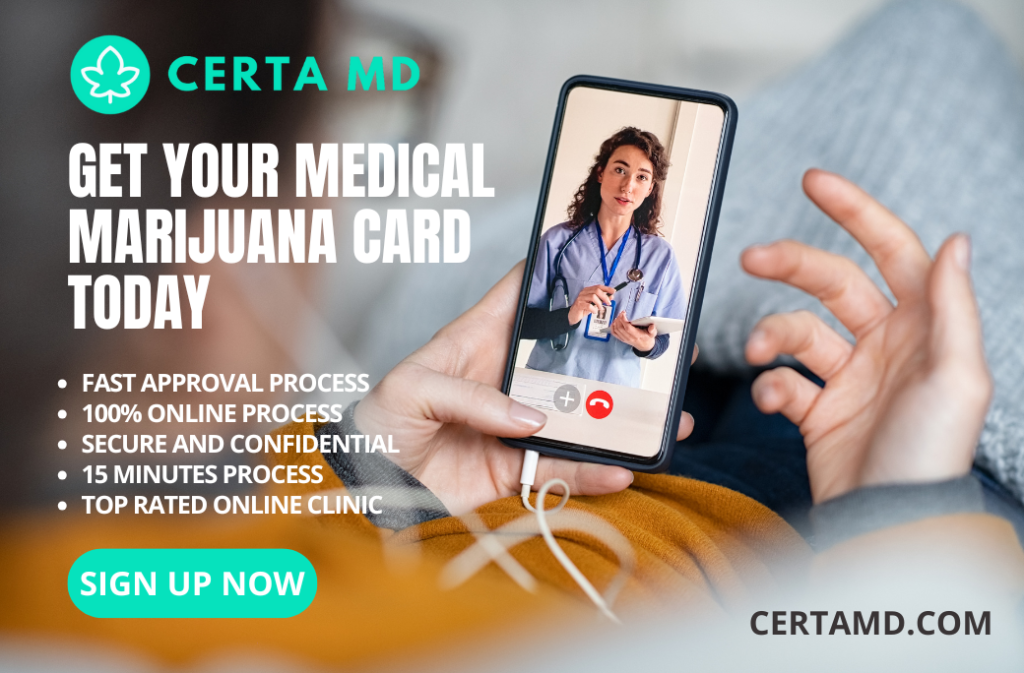
Connecticut now allows telehealth appointments for medical marijuana certifications. This means you can talk to a doctor from your living room using your phone or computer. It is private, quick, and very safe.
During this visit, the doctor will review your medical history. They will ask about your symptoms and discuss if cannabis is right for you. If you are worried about the price, check out our affordable evaluation pricing to see how we keep costs low for patients.
Once the doctor approves you, they will enter your information into the state system. You will need to provide them with a valid email address and your phone number. This is crucial because the state will use that email to contact you.
Step 2: Registering with the CT DCP (DAS Business Network)
After your appointment, check your email inbox. You should receive a confirmation from the Connecticut Department of Consumer Protection (DCP). This email is your golden ticket to the next step.
The email will tell you to create an account with the DAS Business Network. This is just the government website where they manage registrations. You will need to create a user ID and a password.
Once you are logged in, you will see the certification your doctor submitted. Now, it is your turn to provide some details. You will need to upload proof of identity.
Usually, a valid Connecticut driver’s license or state ID works best. You also need to prove you live in Connecticut. Your ID usually covers this, but sometimes they might ask for a utility bill or mail with your address on it.
Step 3: State Payment and Activation
You are almost done! The final step is paying the state registration fee. This is separate from the money you paid the doctor.
You can pay this fee online using a credit card or debit card. As of recently, the state has been working to eliminate the state application fee to make it cheaper for patients, but you should always check the current status on the portal.
Once the payment clears and they review your documents, you will receive a temporary certificate. This is usually a digital file. You can print it out or save it to your phone.
The state will eventually mail you a physical card, but the digital one works immediately. This is the complete cycle of how to get & renew a Medical Marijuana Card in Connecticut for a new patient. The whole thing can often be done in just a few days.
The Renewal Process: Keeping Your Card Active
At CertaMd, getting the card is great, but keeping it is just as important. Your medical marijuana card is not valid forever. In Connecticut, these cards typically expire after one year.
To keep your legal status, you have to renew the card annually. This means you need to see the doctor again for a follow-up. The doctor needs to confirm that the medicine is still helping you.
You should not wait until the last minute. We recommend starting the renewal process 30 days before your card expires. If you let it expire, you cannot buy medicine at the dispensary until it is fixed.
A Real Story: Don’t Be Like John
Let’s talk about a patient we will call “John.” John had his card for a year and it helped his back pain immensely. He knew his expiration date was coming up, but he got busy with work and put it off.
On the day his card expired, he realized he was out of medicine. He tried to book an appointment, but he had to wait a few days. Then, the state processing took another few days.
John ended up with a two-week gap where he had no legal access to his pain relief. He was miserable and anxious. If John had started a month early, he would have had no gap in treatment.
Understanding how to get & renew a Medical Marijuana Card in Connecticut means paying attention to the calendar. The state will usually email you a reminder 60 days before expiration. Do not ignore that email!
Breakdown of Costs: What to Expect
Money is always a big question for patients. It is important to know that health insurance usually does not cover medical marijuana. Because cannabis is still illegal at the federal level, insurance companies won’t pay for the card or the medicine.
When budgeting, you need to think about two different fees.
- The Provider Fee: This is what you pay the clinic or doctor for the evaluation. This covers the doctor’s time and the administrative work of entering you into the system.
- The State Registration Fee: This is paid directly to the state of Connecticut. Historically, this was around $100, but the state has made moves to reduce or remove this fee to help patients.
We believe that cost shouldn’t stop you from getting help. That is why we offer waived fees for veterans as a thank you for their service. If you are a veteran, please let us know so we can assist you.
Estimated Cost Breakdown:
- New Patient Evaluation: Varies by clinic (Check our pricing page).
- Renewal Evaluation: Usually cheaper than the first visit.
- State Fee: Check the DCP portal for the most current fee (often $0 or $100 depending on current laws).
Beyond the Card: Strains and Dispensaries
Once you have your card, the fun part begins. You get to go to the dispensary! But if you are new to this, the menu can look like a foreign language.
Choosing the Right Medicine
Cannabis comes in many different forms. You will see words like “Sativa,” “Indica,” and “Hybrid.” You will also see different names for products, which are called strains.
Sativa strains are usually more energizing and good for daytime use. Indica strains are more relaxing and better for sleep or pain. Hybrids are a mix of both.
Finding the right one takes a little experimentation. You can read our comprehensive guide to cannabis strains to learn more about what might work for your specific condition.
Finding a Dispensary in Connecticut
In Connecticut, you have to choose a “home” dispensary when you register. This is where you will pick up your medicine. However, you can change this facility if you move or find a better shop.
Some dispensaries are strictly for medical patients. Others are “Hybrid Retailers,” meaning they serve both medical patients and adult-use (recreational) customers.
Medical patients often get special perks at hybrid locations. This includes skipping the long lines and avoiding certain taxes. You can use our tool to locate Connecticut dispensaries near your home.
Frequently Asked Questions (FAQ)
We hear a lot of the same questions from patients. Here are the answers to the most common things people ask about the Connecticut Medical Marijuana Registry.
Can I grow my own marijuana in CT with a card?
Yes! As of recently, medical marijuana patients (and even adult-use consumers) are allowed to grow cannabis indoors. There are strict rules on how many plants you can have and they must be kept secure from children/pets.
Does insurance cover the medical card?
Generally, no. Because cannabis is not federally legal, private insurance and Medicaid/Medicare will not cover the cost of the appointment or the cannabis itself.
How long does it take to get approved?
The doctor’s approval is instant. Once you upload your documents to the state, it can take anywhere from 24 hours to a few weeks, depending on how busy the state workers are.
Can I use my card in other states?
Some states offer “reciprocity” and will accept a CT card, but many do not. You must check the laws of the state you are visiting.
Now that you know how to get & renew a Medical Marijuana Card in Connecticut, you can answer these questions for your friends too!
Conclusion
Getting your medical marijuana card in Connecticut does not have to be a headache. It is a three-step process: see the doctor, register online, and get your card. It is designed to be safe and accessible for patients who need it.
Remember, having a card gives you legal protection. It also saves you money on taxes every time you visit the dispensary. Whether you are treating chronic pain or anxiety, you deserve to feel your best.
We hope this guide on how to get & renew a Medical Marijuana Card in Connecticut has cleared up the confusion. Do not let paperwork stand in the way of your health.
If you are ready to start your journey towards natural relief, we are here to help. You can schedule a free consultation with our support team today. We will hold your hand through the whole process.
Sources
National Institutes of Health (NIH) – Cannabis and Cannabinoids: Health Effects
https://www.ncbi.nlm.nih.gov/books/NBK425767/